
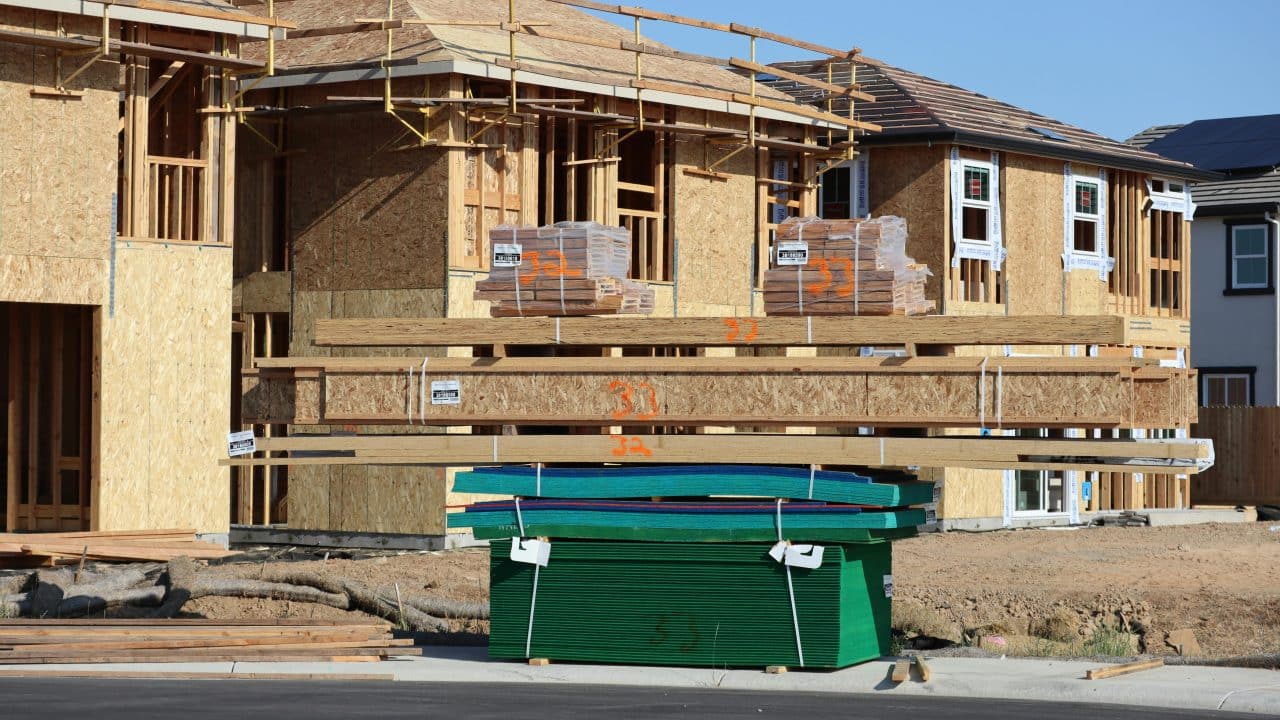
Fix and flip has been the entry point for residential real estate investors for decades. Buy distressed, renovate, sell. The model is simple, the market is competitive, and the margins — for a lot of investors — are getting thinner every year.
Meanwhile, a quieter shift is happening among the more experienced developers we work with. They are moving up market. They are trading in the $300,000 flip for the $1.5 million ground-up build. And the ones who have made that transition are not looking back.
Here is why we think $1 million plus new construction is the smartest play available to residential developers right now, and why the market conditions that make it attractive are not going away anytime soon.
The Fix and Flip Market Has Changed
The fix and flip business was a lot easier ten years ago. You could find distressed properties at meaningful discounts, renovate them for reasonable money, and sell them into a market that had room to run. Margins were wide enough to absorb mistakes.
That environment is mostly gone. Prices have risen dramatically across Greater Boston and the surrounding region. Distressed inventory is scarce. Competition from other investors, wholesalers, and iBuyers has compressed the discount you can expect on acquisition. Material and labor costs have climbed and have not come back down. And the carrying costs of a renovation project — interest, insurance, taxes — eat into margin every month the deal is open.
None of this means fix and flip is dead. There are still good deals to be found. But the easy money is gone, and the investors who are thriving are the ones who have gotten more selective, more disciplined, or moved into a different part of the market entirely.
New Construction Solves Problems Fix and Flip Cannot
When you build new, you control the product from the ground up. You are not inheriting someone else’s deferred maintenance, their outdated layout, or their problematic addition. You are not discovering surprises behind walls. You are building exactly what the market wants, in a location buyers are already paying a premium for, with finishes and specifications you control.
The result is a product that sells faster and at higher prices than comparable renovations. Buyers in the $1.5 million to $3 million range in markets like Lexington, Weston, Concord, and Wellesley are not looking for character. They are looking for new kitchens, new mechanicals, open floor plans, primary suites with walk-in closets, and energy-efficient systems. A new construction home delivers all of that without compromise. A renovation rarely does.
New construction also gives you more control over your timeline and your costs. You know what the foundation will look like because you poured it. You know what the framing looks like because you watched it go up. The surprises that kill renovation margins — the rotted sill plates, the knob and tube wiring, the crumbling foundation — simply do not exist on a ground-up build.
The Supply Problem Works in Your Favor
Massachusetts has a severe shortage of move-in ready housing inventory, and that shortage is most acute at the top of the market. In towns like Newton, Winchester, Belmont, and Cohasset, there are far more qualified buyers than there are quality homes available. New construction that hits the market in these towns does not sit. It gets absorbed quickly, often with multiple offers, because there is nothing else to buy.
This supply constraint is structural. It is not going to be solved in the next year or two. Towns with strict zoning, limited available land, and strong school systems do not suddenly produce excess inventory. The buyers keep coming and the supply stays tight, which is exactly the environment where a disciplined new construction developer can generate exceptional returns.
The Numbers Work at This Price Point
There is a common misconception that building a $2 million home is riskier than flipping a $400,000 house. The opposite is often true.
On a $400,000 flip, a $40,000 mistake — a bad subcontractor, an unexpected structural issue, a slow market — can wipe out most or all of your profit. The margin of error is small because the absolute dollars involved are small.
On a $2 million new construction project in Lexington or Weston, the spread between your all-in cost and your exit price is far larger in absolute terms. A well-built home in one of these markets sells because of where it is, not despite it. The buyer pool is deep, the demand is consistent, and the exit is predictable in a way that distressed renovation projects in softer markets simply are not.
The higher loan amounts also change the math on your time. One $1.5 million construction loan generates more gross profit potential than four or five $300,000 flip loans. You are putting the same amount of effort — the due diligence, the team management, the financing — into a deal that pays you significantly more on the back end.
The Borrower Profile is Better
This one matters more than people realize. The developer who is building a $2 million home in Concord is a fundamentally different person than the first-time flipper trying to squeeze a $30,000 profit out of a three-bedroom ranch in a secondary market.
Experienced new construction developers have track records. They have relationships with architects, engineers, and general contractors. They understand permitting. They have been through the draw process before. They know how to manage a budget and a schedule. The deals are cleaner, the communication is better, and the projects close on time at a much higher rate.
As a lender, this matters enormously. The quality of the borrower is part of the underwriting. And in the $1 million plus new construction space, the borrower quality is consistently higher.
What You Need to Make This Work
Moving from fix and flip to $1 million plus new construction is not a leap everyone is ready to make. It requires a track record, a reliable contractor relationship, and a lender who understands how ground-up construction financing works.
That last point is where a lot of developers run into problems. Most hard money lenders are set up for renovation loans. They do not understand construction draw schedules, they do not move fast enough to keep a construction project funded, and they charge rates and fees that make the economics difficult at this price point.
At Mayflower Venture Partners, new construction is what we focus on. We process draws in 48 hours. We understand the markets in Lexington, Weston, Concord, Newton, Wellesley, and the other high-value communities where this strategy works best. We issue term sheets in 24 hours and close in 10 to 14 business days.
If you are an experienced developer thinking about making the move to $1 million plus new construction, or if you are already building and looking for a lender who can keep pace with your projects, we want to talk.
Apply now or call us at 617-553-6781. Term sheets in 24 hours.
Leave a Reply Cancel reply